Connected battlespace modernizes fight in Indo-Pacific
KADENA AIR BASE, Japan (AFNS) --
The RTIC program of record provides real-time situational awareness to KC-135 crews by displaying enemy threats, target data and allied force locations on an avionics display located in the cockpit.
“Prior to RTIC, we were completely relying on outside sources to tell us where threats were, let us know if we were in danger and tell us where our receivers were,” said U.S. Air Force Maj. Mike Starley, Air National Guard Air Force Reserve Command Test Center KC-135 test detachment director. “Now the KC-135 crews have a moving map screen available in the cockpit and can make their own tactical decisions on whether or not they’re at risk, which will allow them to get closer to the fight and offload fuel.”
Building upon RTIC, the Utah ANG and AATC, in coordination with Collins Aerospace, an RTX business, have been testing a connected battlespace through what the team calls the Intelligent Gateway. This new advancement for the KC-135 was able to bridge beyond line-of sight networks with operational and strategic level information to line-of-sight datalinks at the tactical edge. This allows the transfer of situational awareness and closure of decision cycles between joint and air operations centers, tactical command and control nodes, and joint and coalition assets from sub-surface all the way to space.
With the Intelligent Gateway, air operations centers are provided with a live picture of the battlespace and have situational awareness they did not have before. Joint, allied and partner forces can communicate through the KC-135 Intelligent Gateway to make tactical decisions with a common operating picture. From the warfighter in the air, to the commander on the ground, everyone’s situational awareness is enhanced through the KC-135 Intelligent Gateway.
“We only have so many surveillance aircraft available and in a theater as large as the Indo-Pacific, there’s going to be a lot of holes with no command and control,” Starley said. “But we’re always going to have a tanker there, no matter what. Now we’re able to take advantage of all that space and use the KC-135, that’s already in the fight anyway, for C2.”
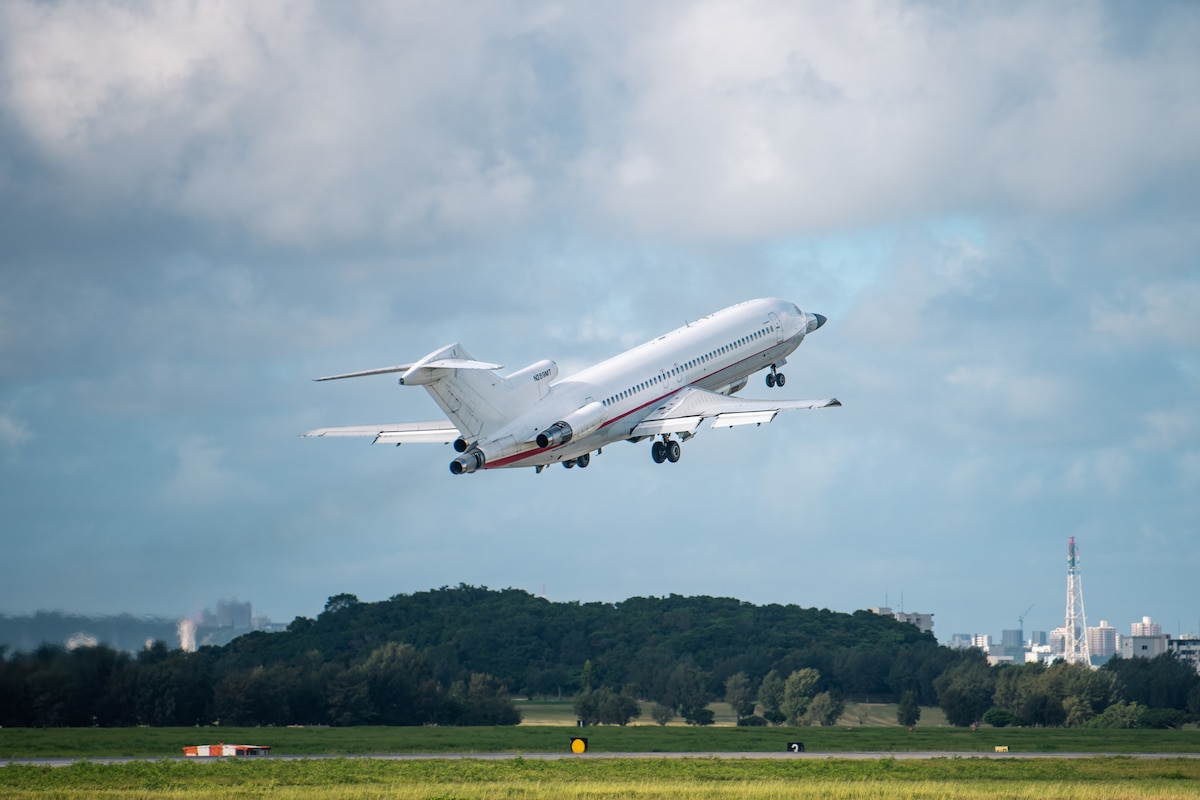
During Northern Edge 23-2, the Utah ANG KC-135 worked in tandem with the RMT to test advanced communication and intelligence-gathering capabilities. The RMT uses a combination of radar and electronic intelligence sensors to capture information on simulated threats. Onboard processors then generate a clear targeting solution that is passed on to the Utah ANG KC-135 and then to joint and allied players on the network for C2 purposes.
The KC-135 team from Utah ANG and the RMT participated in Northern Edge 23-1 recently held in Alaska as well.
"The Collins/RTX team in collaboration with the Utah ANG picked up in Japan, where we left off in Alaska,” said Lora Magliocco, Collins Aerospace Connected Battlespace Joint Experimentation and Demonstration director. “The team demonstrated the value of connecting the battlespace by providing relevant command and control, intelligence, surveillance and reconnaissance data to decision makers at machine speeds. The connected battlespace opens new opportunities to apply artificial intelligence, big data concepts and advanced networking at the tactical edge."
This training enables real-world proficiency in sustaining joint forces through detecting, locating, tracking and engaging units at sea, in the air, on land and in cyberspace in response to a range of mission areas. These systems are being stress tested and matured in the Indo-Pacific region during exercise Northern Edge 23-2 and are supporting Joint All-Domain Command and Control and Advanced Battle Management System initiatives by not only increasing communication capabilities, but also drastically shortening real-world decision-making timelines.
“When an aircraft lands after a mission with intelligence, surveillance, or reconnaissance, there is usually a 72-hour air tasking order cycle before a decision is made to go after that target,” Starley said. “In theory, we could take that 72-hour ATO cycle and shrink it to 72 minutes or less, meeting commander’s intent.”
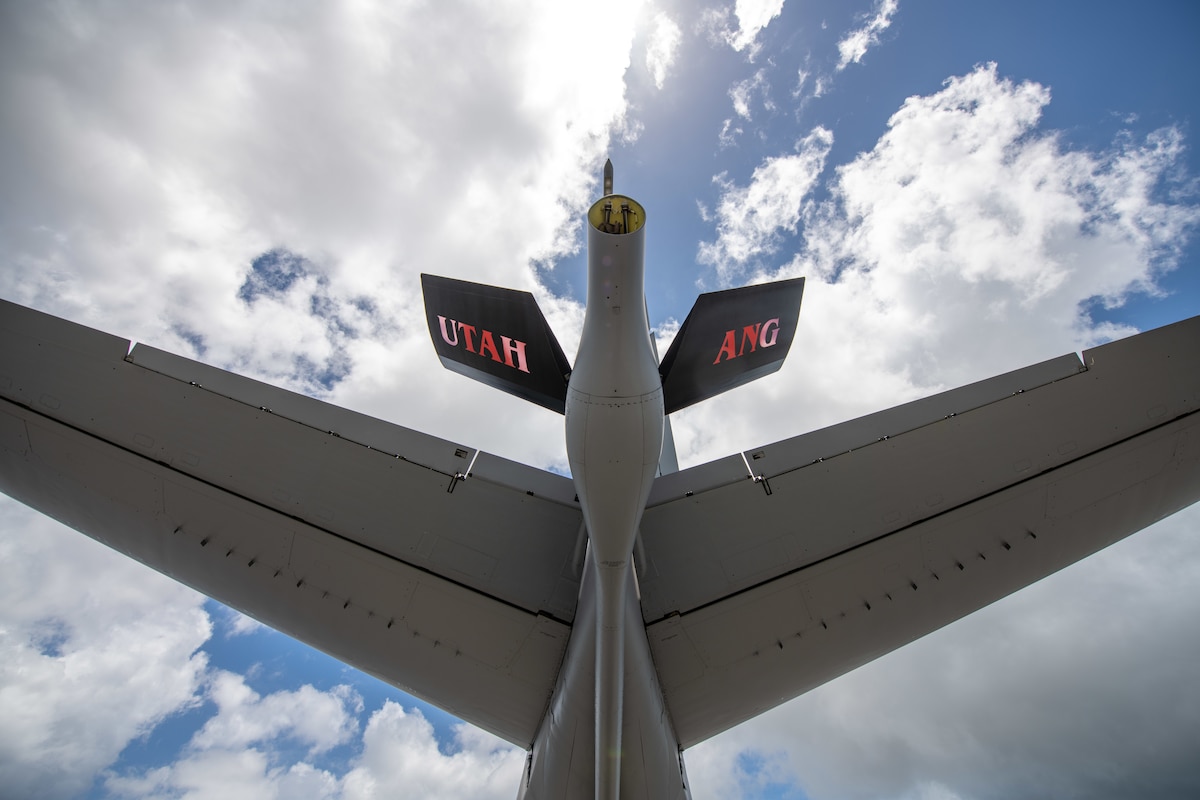
History was made during exercise Northern Edge 23-2 as the Utah Air National Guard’s 151st Air Refueling Wing, working with the Air National Guard and Air Force Reserve Test Center, sent their modified KC-135 Stratotanker to Kadena Air Base for use in the Western Pacific.
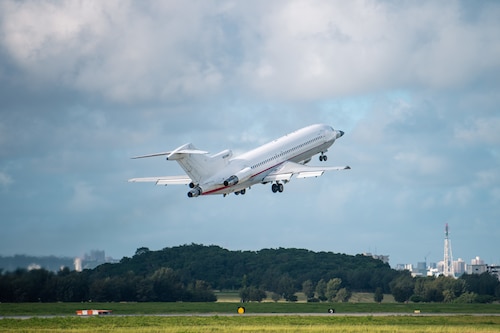
The RTIC program of record provides real-time situational awareness to KC-135 crews by displaying enemy threats, target data and allied force locations on an avionics display located in the cockpit.
“Prior to RTIC, we were completely relying on outside sources to tell us where threats were, let us know if we were in danger and tell us where our receivers were,” said U.S. Air Force Maj. Mike Starley, Air National Guard Air Force Reserve Command Test Center KC-135 test detachment director. “Now the KC-135 crews have a moving map screen available in the cockpit and can make their own tactical decisions on whether or not they’re at risk, which will allow them to get closer to the fight and offload fuel.”
Building upon RTIC, the Utah ANG and AATC, in coordination with Collins Aerospace, an RTX business, have been testing a connected battlespace through what the team calls the Intelligent Gateway. This new advancement for the KC-135 was able to bridge beyond line-of sight networks with operational and strategic level information to line-of-sight datalinks at the tactical edge. This allows the transfer of situational awareness and closure of decision cycles between joint and air operations centers, tactical command and control nodes, and joint and coalition assets from sub-surface all the way to space.
With the Intelligent Gateway, air operations centers are provided with a live picture of the battlespace and have situational awareness they did not have before. Joint, allied and partner forces can communicate through the KC-135 Intelligent Gateway to make tactical decisions with a common operating picture. From the warfighter in the air, to the commander on the ground, everyone’s situational awareness is enhanced through the KC-135 Intelligent Gateway.
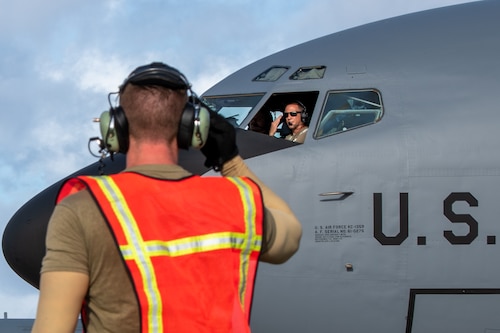
“We only have so many surveillance aircraft available and in a theater as large as the Indo-Pacific, there’s going to be a lot of holes with no command and control,” Starley said. “But we’re always going to have a tanker there, no matter what. Now we’re able to take advantage of all that space and use the KC-135, that’s already in the fight anyway, for C2.”
During Northern Edge 23-2, the Utah ANG KC-135 worked in tandem with the RMT to test advanced communication and intelligence-gathering capabilities. The RMT uses a combination of radar and electronic intelligence sensors to capture information on simulated threats. Onboard processors then generate a clear targeting solution that is passed on to the Utah ANG KC-135 and then to joint and allied players on the network for C2 purposes.
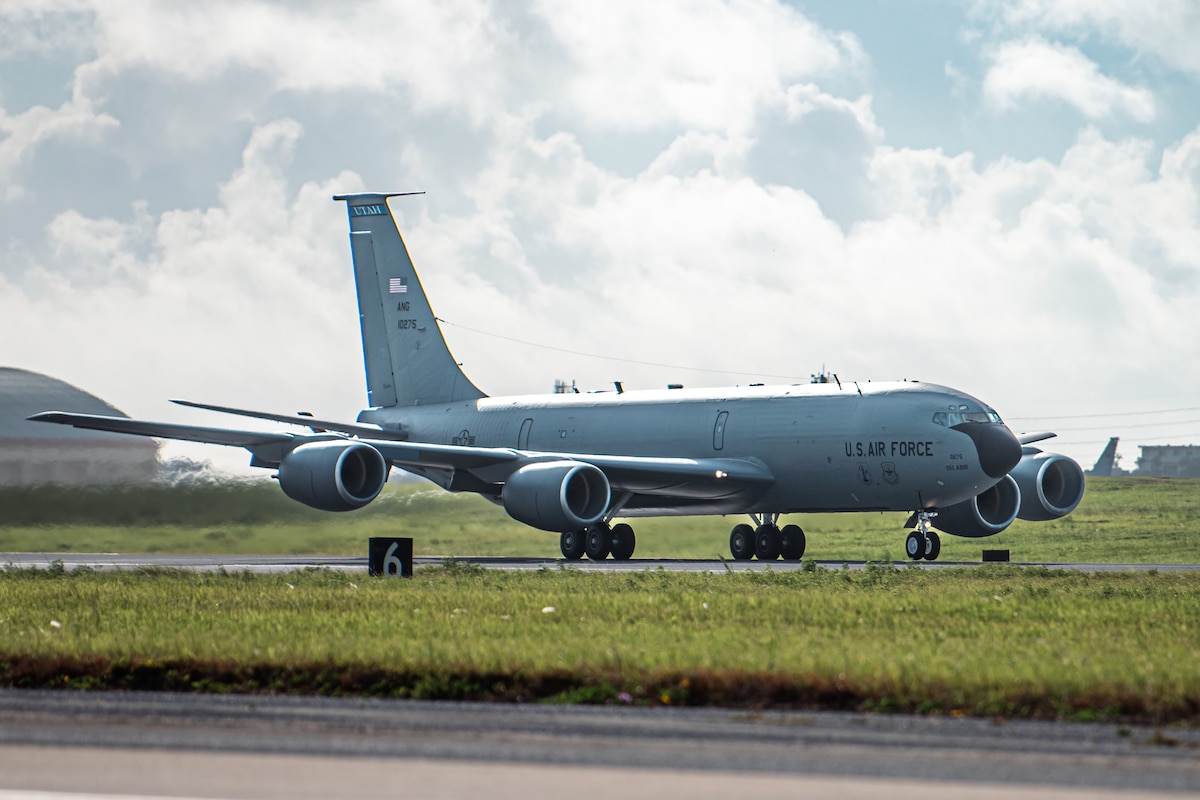
The KC-135 team from Utah ANG and the RMT participated in Northern Edge 23-1 recently held in Alaska as well.
"The Collins/RTX team in collaboration with the Utah ANG picked up in Japan, where we left off in Alaska,” said Lora Magliocco, Collins Aerospace Connected Battlespace Joint Experimentation and Demonstration director. “The team demonstrated the value of connecting the battlespace by providing relevant command and control, intelligence, surveillance and reconnaissance data to decision makers at machine speeds. The connected battlespace opens new opportunities to apply artificial intelligence, big data concepts and advanced networking at the tactical edge."
This training enables real-world proficiency in sustaining joint forces through detecting, locating, tracking and engaging units at sea, in the air, on land and in cyberspace in response to a range of mission areas. These systems are being stress tested and matured in the Indo-Pacific region during exercise Northern Edge 23-2 and are supporting Joint All-Domain Command and Control and Advanced Battle Management System initiatives by not only increasing communication capabilities, but also drastically shortening real-world decision-making timelines.
“When an aircraft lands after a mission with intelligence, surveillance, or reconnaissance, there is usually a 72-hour air tasking order cycle before a decision is made to go after that target,” Starley said. “In theory, we could take that 72-hour ATO cycle and shrink it to 72 minutes or less, meeting commander’s intent.”
